60 Colchester Square #1, Kanata, ON K2K 2Z9



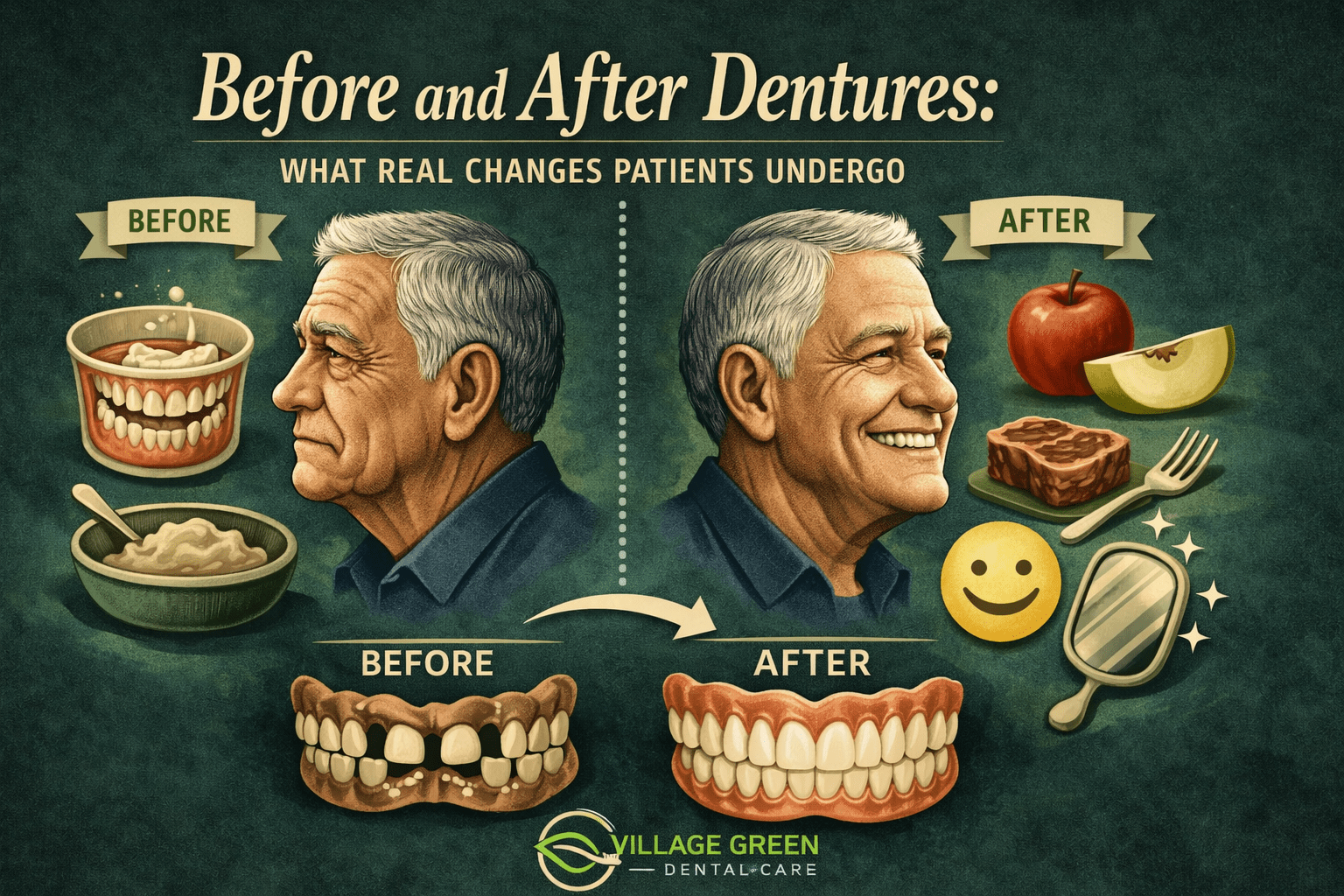
Dentures assist in restoring the lost teeth and regaining normalcy, confidence, and comfort. There are visual before and after photographs that demonstrate how the right denture can improve the look, speech and chewing and biting capacity. The outcome is determined by the type of denture, oral health, and care by a professional.
The journey of every patient is different. The modifications that follow the placement of dentures rely on the nature of the dentures selected, the condition of the mouth and appropriate professional guidance. The procedure and explanation of before and after visuals are examined below:
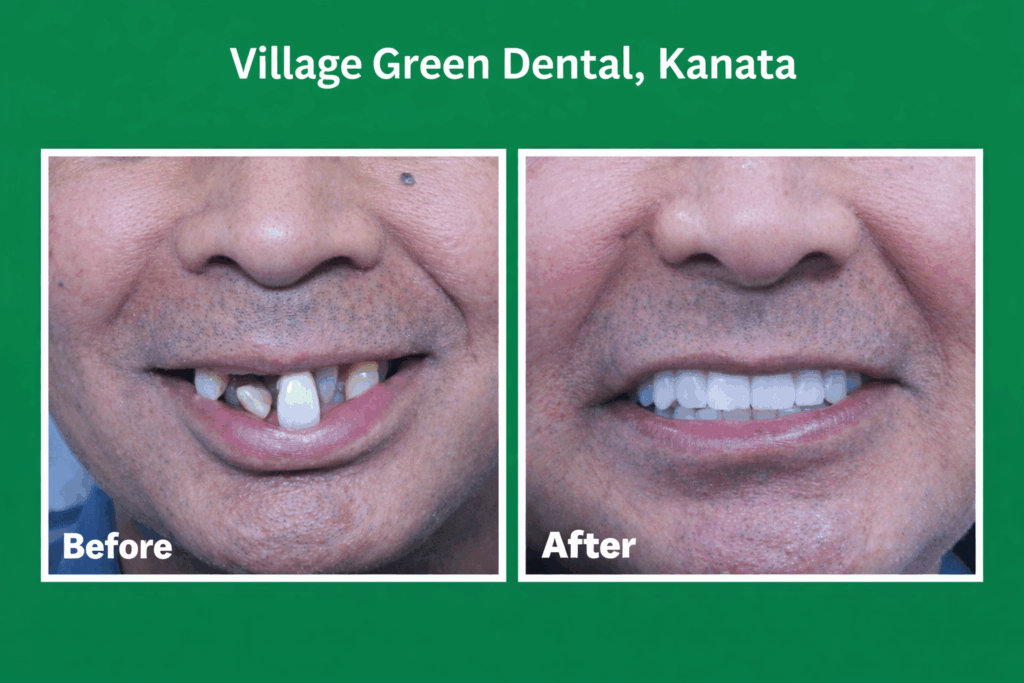
Full Dentures: Facial Shape and Functional Restoration
Full dentures are applied when all the upper or lower teeth are missing. Patients can lose self-confidence and social comfort due to sunken cheeks, heavier lines on their faces, and difficulty speaking or eating before treatment, which are common in such patients.
Once fitted, the face is supported and therefore gives a balanced and natural appearance. Benefits of much clearer speech, increased ability to chew and more day-to-day comfort ensue, particularly with a correct fit and frequent readjustments.
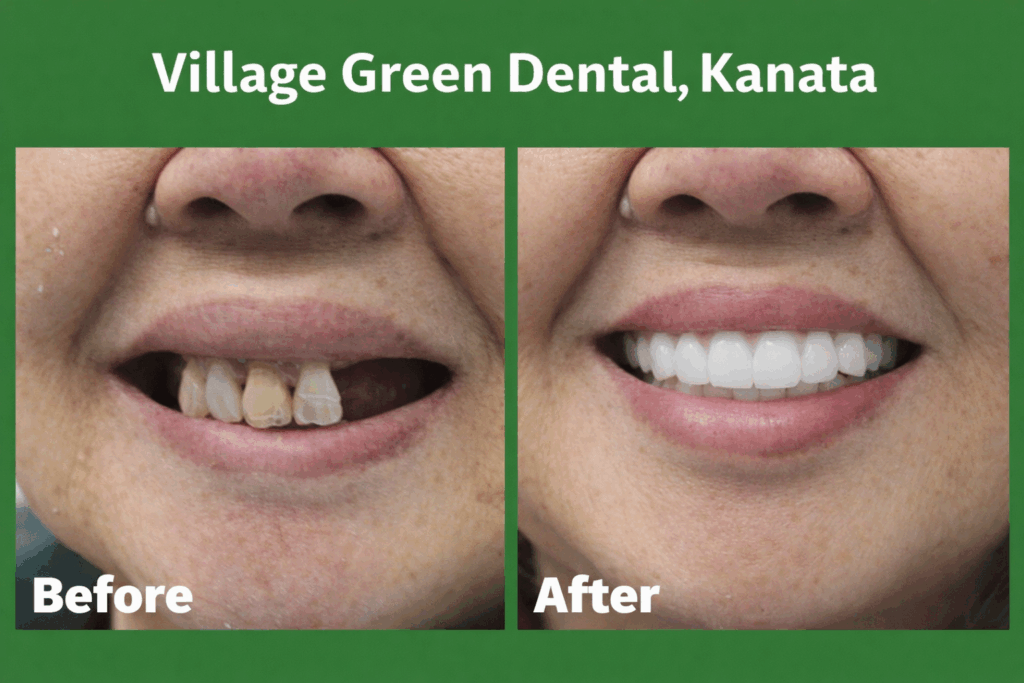
Before treatment:
Toothless patients usually have a sunken cheek, cannot chew, have poor articulation and feel uncomfortable in the social environment.
After treatment:
Full dentures also provide facial support resulting in a more natural shape and better speech. Convenience in eating and a new desire to smile boost confidence.
Patients commonly notice:
- Better facial support
- Improved ability to eat and speak
- Increased confidence while smiling
Partial Dentures: Sealing the Tooth Gaps and Retaining the Natural teeth
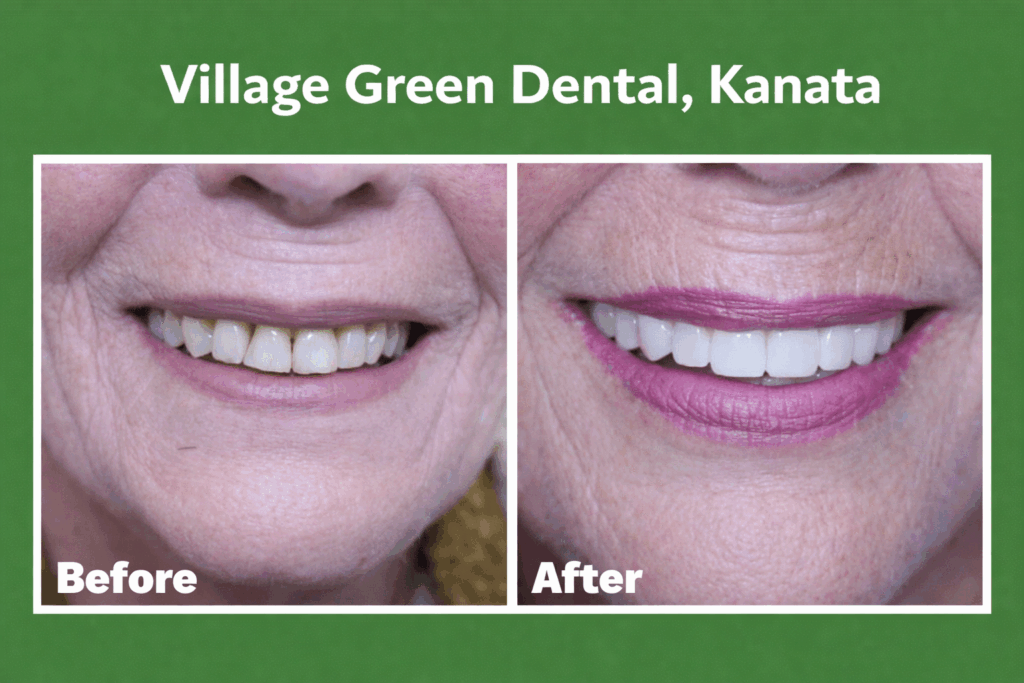
Partial dentures are used when the patient still has a few healthy natural teeth. Before treatment, the gap in missing teeth is noticeable, and the resulting unevenity in chewing along with the displacement of other teeth can occur over time. Once fitted the partial dentures fill up smoothly and shape up with the existing teeth, ensuring that there is balance in the bite and the remaining teeth are not harmed.
Gap exposures are embarrassing and lopsided chewing. Partial dentures are used to fill in spaces and are fitted with the natural teeth. They keep the bite at a position and make the chewing more comfortable. After the gaps have been filled, many patients feel more confident in smiling and eating.
Before treatment:
Visible gaps may cause embarrassment, uneven chewing, and shifting of nearby teeth.
After treatment:
The partial dentures are also compatible with natural teeth, as they provide appropriate bite positioning and increase the comfort in chewing.
Patient outcome:
- A complete-looking smile
- Better chewing balance
- Protection of remaining natural teeth
Immediate Dentures: Maintaining Appearance During Healing
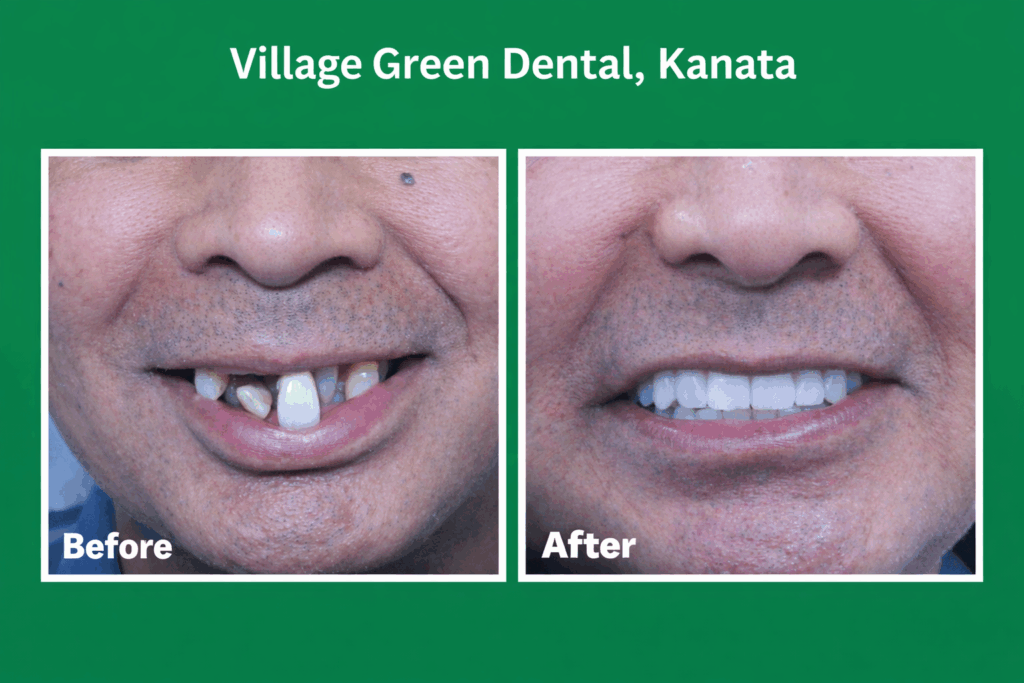
Immediate dentures are fitted immediately after the extraction of the teeth. Most patients are worried about being toothless in the process of healing. In the case of immediate dentures, patients walk out of the clinic with their own teeth.
Although a person might need to make adjustments as the gums heal, they do not change how it looks and can adjust gradually to denture use. The immediate dentures also ensure that patients can easily adapt to both talking and eating.
Before treatment:
Patients often feel anxious about being toothless during healing.
After treatment:
Immediate dentures enable the patients to walk out of the clinic with a complete set of dentures on the same day. Subsequent changes are not a problem, but patients tend to be more relaxed in the healing process.
Patient outcome:
- No toothless healing phase
- Emotional comfort after extractions
- Early adjustment to speaking and eating
Implant-Supported Dentures- Better Strength and Relief
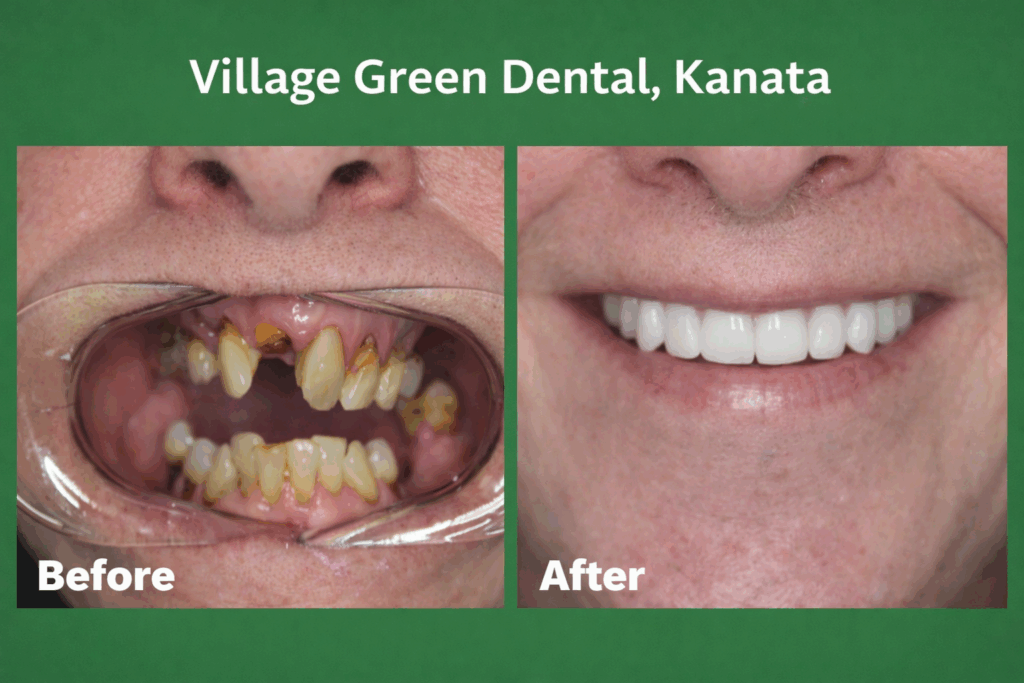
Dental implants are used to hold dentures supported by the jawbone. Some patients have difficulties with loose dentures, gum irritation, or the inability to eat certain foods before treatment. These dentures become comfortable and stable after treatment and enhance comfort during chewing and talking as well as increase confidence during daily activities. They are also used to maintain the strength of the jawbone.
Before treatment:
A lot of patients have problems with loose dentures or sore gums, particularly with harder food.
After treatment:
Dentures that are supported by implants remain firmly in position. Patients are more likely to feel safe when eating and talking with this type.
Patient outcome:
- Increased denture stability
- Better chewing efficiency
- Greater long-term comfort
Celebrity Denture Transformations: A Common and Accepted Solution
Dentures are widely used, even among public figures.
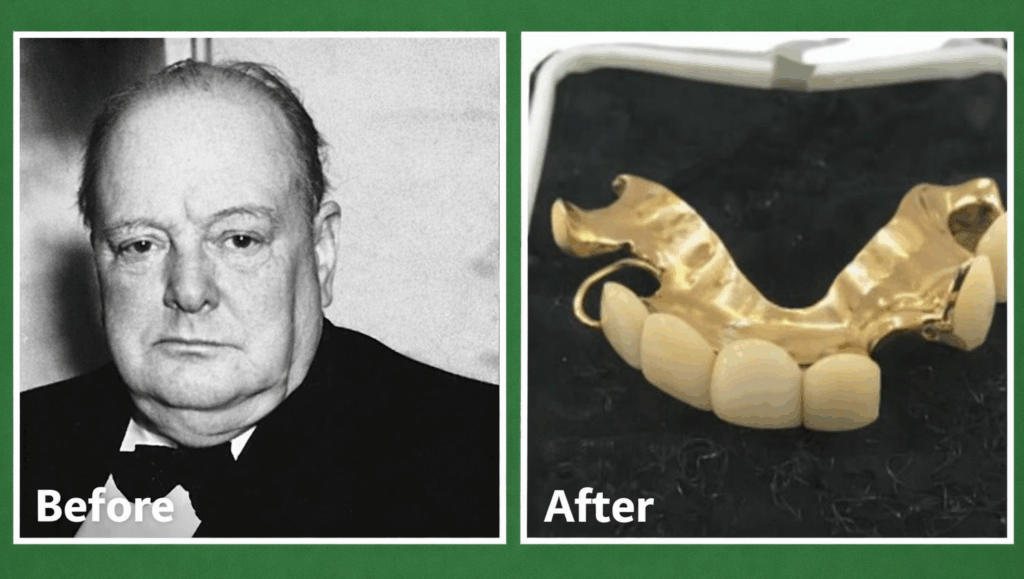
Winston Churchill wore specially designed gold mounted dentures to support clear speech.
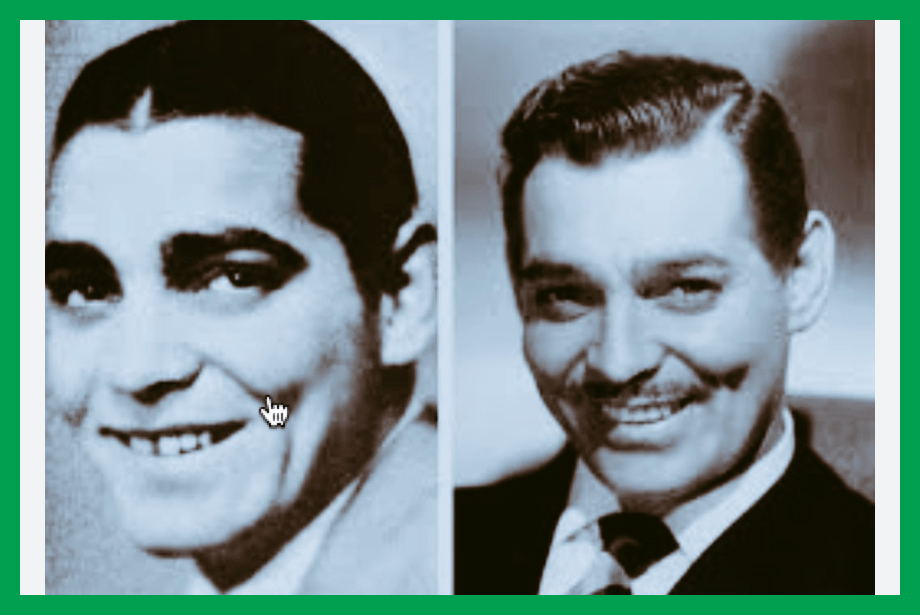
Classic examples include Clark Gable who wore dentures following the loss of his teeth at an early age;
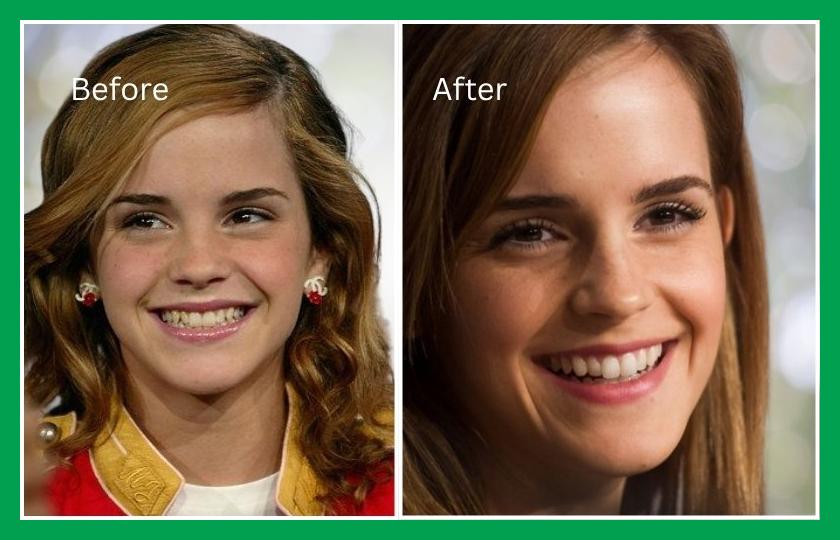
Emma Watson also wore dentures in the Harry Potter series. These narratives demonstrate that dentures represent useful health measures, and they do not indicate old age and frailty.
The Importance of Before and After Denture Results
The view of before and after case creates expectations and shows how dentures enhance functioning and appearance. Due to the individuality of each mouth, professional analysis and individual planning are the key to success.
Considering Dentures?
You could be in need of a full denture, partial, or only an implant backed denture, a personal one-on-one consultation will make it easier to select the most suitable for your comfort, health, and lifestyle.